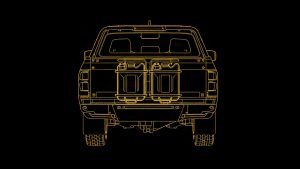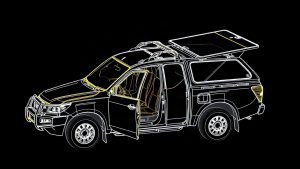
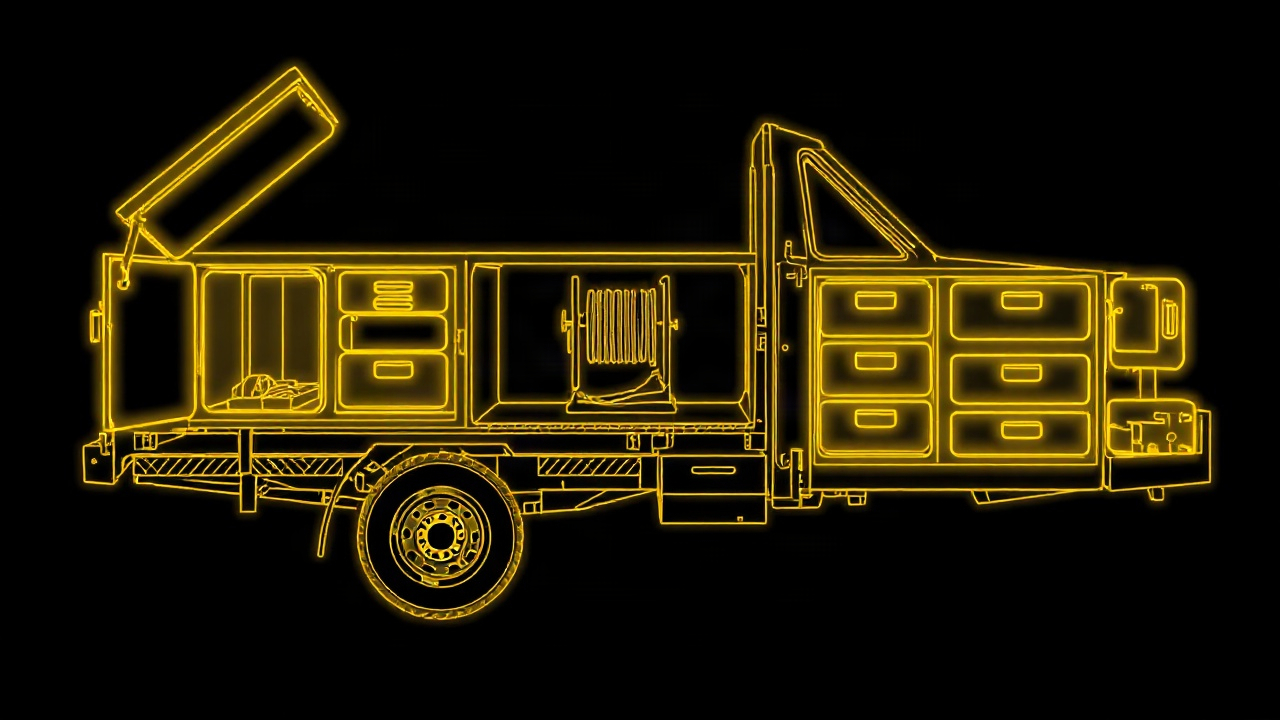
An electrician’s service body should be built around small parts and quick access: shallow divided drawers at waist height on the kerb side, a low compartment for cable drums with a way to pull cable out, a padded spot for test gear, a ladder and conduit rack on top, and lighting inside every compartment. Work out what you reach for most, put that closest to hand, and check the total weight against your ute’s payload before you sign off the layout.
We covered the broad idea of service bodies for trades and fleets separately. This one is just about sparkies, because the way an electrician uses a vehicle is different from a plumber or a mechanic. You carry less bulk and a lot more small stuff, and you go back to the ute many times a day for one fitting.
Service body or tray and canopy?
Both work. A tray with a canopy gives you a big open deck you can reconfigure, and it suits sparkies who also haul switchboards, pallets or bulky gear. A service body gives up some of that open space in exchange for compartments that open from the side at standing height. If most of your day is domestic and light commercial work, with lots of small trips back to the vehicle, the service body usually wins.
If you are still deciding between the two, our guide to picking a canopy by trade has a section on electricians, and the canopy vs tray article covers the trade-offs.
Small parts: shallow drawers, not deep bins
The thing that goes wrong most often is deep storage. Fittings, cable ties, lugs and connectors all sink to the bottom of a deep drawer, and you end up emptying it on the footpath to find one gland. Shallow drawers with dividers fix that. You open it and see everything.
- Put the parts you use daily in the top shallow drawers on the kerb side, between waist and chest height.
- Use removable organiser trays so you can take a job’s worth of parts inside.
- Keep slower-moving stock in higher or lower compartments, and the overflow in the road-side compartments.
Drawers need to lock in both the open and closed positions so they do not slide out on a slope. Our article on aluminium ute drawers goes into runners and load ratings.
Cable drums and reels
Cable is the heaviest thing most electricians carry. Full drums belong low and as close to the rear axle as the layout allows, not up high or hanging over the back. A compartment with a spindle, or a slot to feed cable out, means you can pull and cut lengths without lifting the drum out of the body. If you carry several sizes, a divided low compartment stops the drums rolling into each other.
Test gear and power tools
Meters, testers and anything with a screen need a spot where they will not be knocked about by loose tools. A shelf with a lip or a padded compartment works. Cordless tools and battery packs go in a compartment where you can see the charge level without unloading everything, and if you charge in the vehicle, plan the power and ventilation for that compartment from the start.
Ladders and conduit on top
Ladders and lengths of conduit should not live inside the compartments. A rack over the body keeps them off the floor and out of the way. Check the rack’s rated load, the height it adds for car parks and garages, and whether you can reach the ladder easily from the ground. Our article on roof and ladder racks has more on load and mounting.
Lighting and locking
Early starts and late finishes mean you will be opening compartments in the dark. LED strips inside each compartment cost little compared with the time saved; see LED lighting for canopies. Because a sparkie’s vehicle often holds expensive tools and copper, think about central locking so every door locks with the key fob and you do not leave one open on a busy site.
A layout that works for many electricians
| Position | What goes there |
|---|---|
| Kerb side, waist height | Shallow divided drawers for daily parts |
| Kerb side, upper | Test gear shelf, PPE, paperwork |
| Road side, low near the axle | Cable drums with a pull-out or feed slot |
| Road side, upper | Power tools, batteries, chargers |
| Rear compartment | Overflow stock, extension leads, bulky items |
| Rack over the body | Ladders and conduit |
Swap sides if you mostly park with the other side to the kerb. The point is that the thing you touch forty times a day should be the easiest thing to reach.
Weight and payload
Aluminium keeps the body itself light, but a sparkie’s load creeps up: cable, fittings, a generator, spare stock you meant to unload last month. Add up the body, racks, drawers and a normal working load, then check it against your ute’s payload and GVM. Our notes on weight and staying legal walk through the sums.
Getting one built
UTE HARIO builds aluminium service bodies, trays and canopies to order in Melbourne. Send us your ute make and model, cab type, the ten things you use most, your longest item and any racks you need, and we can lay out the compartments around that. You can also browse more toolbox and storage guides, or look at ready-made options in the shop, including the HARIO FC-180 jack-off crossdeck canopy if a canopy setup suits you better.
Frequently asked questions
What is the best ute setup for an electrician?
For most sparkies working out of one vehicle every day, a service body works better than a tray with a canopy. Side compartments open at waist height from the kerb, so small parts, test gear and power tools are reachable without climbing onto the tray.
Should electricians use shallow or deep drawers?
Mostly shallow. Small fittings, lugs, glands and connectors get lost in deep drawers. Keep one or two deeper drawers or compartments for power tools and bulky items.
Where should cable drums go in a service body?
Low and close to the axle, in a compartment with a spindle or a dispenser slot so you can pull cable without lifting the drum out. Full drums are heavy, so they should not sit high or hang out the back.
Do I need a ladder rack on an electrician’s service body?
Most electricians do. A rack over the body keeps ladders and conduit off the floor of the compartments. Ask for a rack that fits the body you are buying so the mounting points line up.
How do I keep a service body inside payload limits?
Add up the body, racks, drawers, cable and stock you normally carry, then compare it with your ute’s payload and GVM. Aluminium helps, but a full load of cable and fittings adds up quickly.