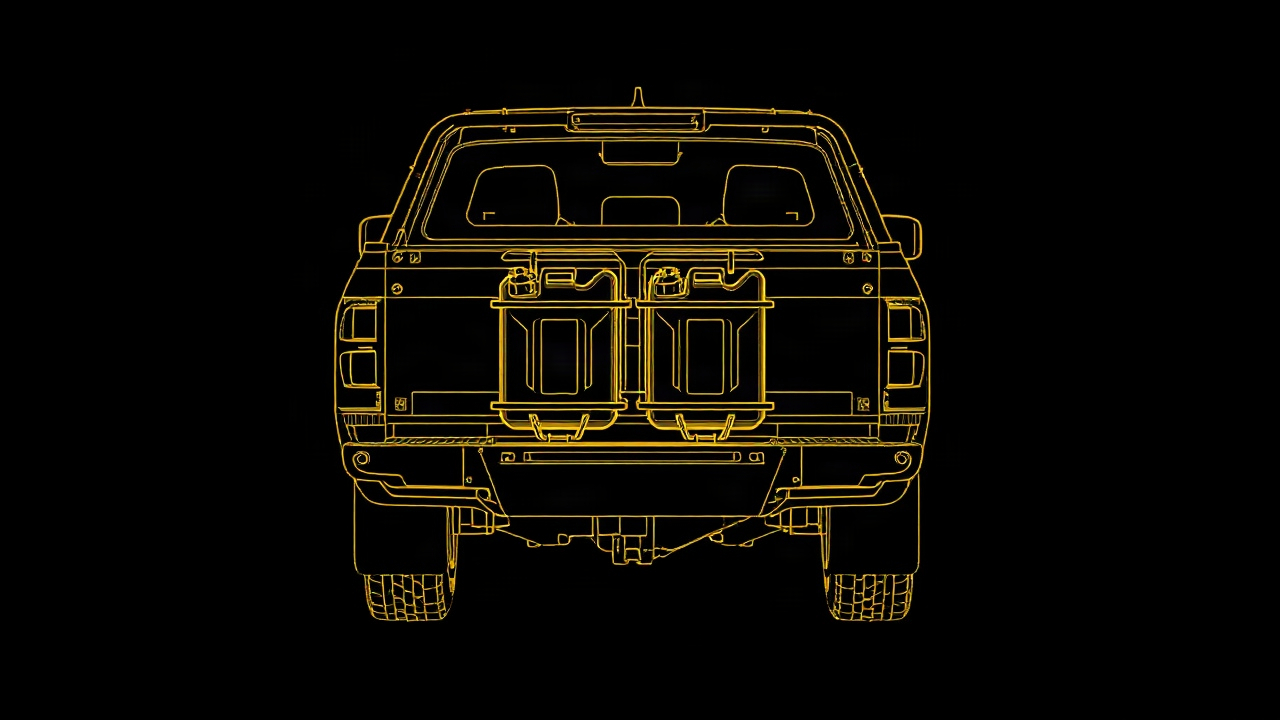
Carry jerry cans outside the canopy, in a holder that locks the can in place, mounted low and away from the exhaust and electrics. Use cans made and marked for fuel, keep petrol and diesel in different colours, leave room at the top for expansion, and count the weight against your payload.
Spare fuel is common on touring builds and on work utes that run generators or small plant. Most of the problems come from where the can ends up, not the can itself: rattling loose in a tray, sitting in a sealed toolbox in the sun, or strapped next to a battery.
Keep fuel out of closed compartments
A canopy is built to keep dust and water out, which also means it keeps fumes in. Petrol vapour in a sealed compartment is a fire risk and the smell gets everywhere, including the cab on a dual cab ute. Diesel is less volatile but still smells and stains if a cap weeps.
So the rule is simple. Fuel goes outside, or in a holder that is open to the air. If you want spare fuel on a canopy, plan the mounting point on the outside from the start.
Where to mount a holder
- Rear corners. Easy to reach and easy to fill. Check the can will not block a tail light, number plate or rear door.
- Canopy sides or the headboard area. Keeps weight closer to the axle. Make sure gullwing doors still open fully.
- Roof. Possible on a roof rack, but weight up high makes the ute roll more and lifting a full can overhead is hard work. Better kept for light loads.
- Away from heat and sparks. Stay clear of the exhaust, battery boxes, wiring and anything that gets hot.
Our guide to roof racks for ute canopies covers roof mounting in more detail if that is the only space left.
Choosing a holder
A good holder grips the can on all sides and locks it, so it cannot bounce out on corrugations. Look for:
- A frame that fits the can you actually own. Jerry can shapes vary more than people expect.
- A clamp or strap that cannot work loose, plus a padlock point if the ute is parked on job sites or at camp.
- A mount bolted to the canopy frame or tray structure, not just through a thin panel.
- Drainage, so water and spilt fuel do not sit in the bottom of the holder.
The cans themselves
- Use containers made for fuel. Look for cans marked to the Australian standard for portable fuel containers. Old drink bottles and water containers are not fuel cans.
- Separate petrol and diesel. Different colours, and label them. Putting petrol in a diesel engine is an expensive mistake.
- Leave space at the top. Fuel expands in the heat, and a brimful can can leak or swell.
- Check seals and caps. A cap that weeps a little in the driveway leaks a lot over a day of rough road.
- Fill them on the ground. Put the can on the ground when filling at the servo, not on a tray or bed liner, to reduce the static risk.
Weight and balance
Fuel is heavy. Two full 20 litre cans add roughly 40 kilograms behind the rear axle, on top of the canopy, drawers, tools and water. On some utes that is the difference between legal and overloaded. Run the numbers with our payload guide, and if you also carry water, see our notes on water tank trays for touring.
Planning it into a build
Holders bolted on afterwards often end up wherever there is a gap. When the canopy is made to order, the mounting point can be planned with the rest of the layout, so the can sits low, clears the doors and bolts to the frame.
UTE HARIO canopies are built to order, so mention spare fuel when you ask for a quote. Start with the HARIO FC-180 jack-off crossdeck canopy, browse the shop, or read more toolbox and storage guides.
Frequently asked questions
Can I carry jerry cans inside a ute canopy?
Not inside a closed compartment. Fuel vapour builds up in a sealed space and can get into the cab or near a spark source. Mount cans outside the canopy, or in a holder with open venting to the air.
Where is the best place to mount a jerry can holder?
Low and as close to the axle as practical, on the outside of the canopy or tray, away from the exhaust and any wiring for lights or batteries. A rear corner or side mount is common. High roof mounts work but raise the centre of gravity.
Should I use metal or plastic jerry cans?
Both are fine if they are made and marked for fuel to the relevant Australian standard. Metal cans handle knocks well; plastic cans are lighter and do not rust. Keep petrol and diesel in different coloured cans so they never get mixed up.
How full should I fill a jerry can?
Leave some space at the top. Fuel expands as it warms up in the sun, and a can filled to the brim can leak or bulge on a hot day.
Does carried fuel count toward my payload?
Yes. A full 20 litre can of diesel weighs roughly 20 kilograms including the can, and that adds to the canopy, tools and water you already carry. Check the total against your ute’s payload.