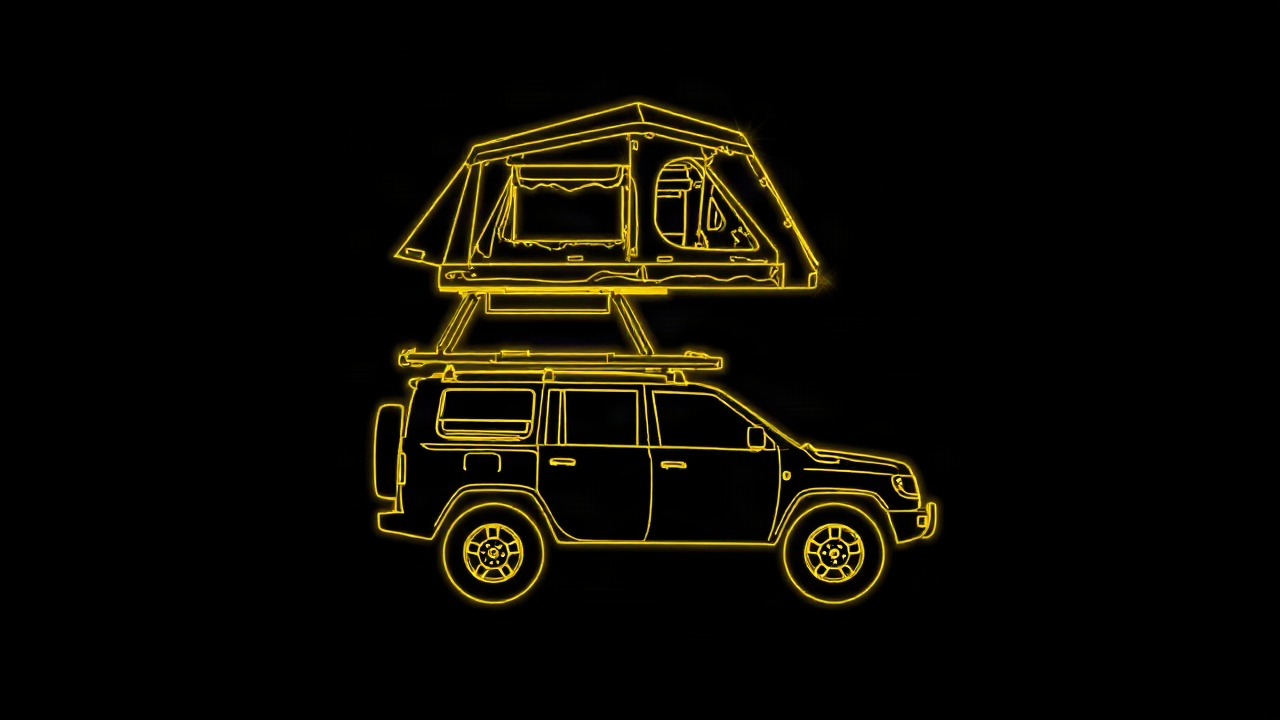
A rooftop tent on a ute canopy works well as long as three things line up: the rack’s dynamic load rating covers the tent while you’re driving, the static rating covers the tent plus the people sleeping in it, and the rack bolts to a canopy roof that has been reinforced for the job. Add the tent to your payload sums, and plan the height and ladder access before you buy.
Rooftop tents are popular on touring utes because they get you off the ground and set up quickly. Putting one on the canopy rather than the cab keeps the weight over the tray and leaves the canopy space below free for gear.
Dynamic and static load
These two ratings are the most important numbers in the whole setup, and they mean different things.
- Dynamic load is what the rack can carry while the ute is moving. Braking, cornering and corrugations put far more force through the mounts than a parked load does, so this is the lower figure.
- Static load is what the rack can hold when you’re parked. With a tent, that has to cover the tent, the bedding and everyone sleeping in it.
Check both for the rack, the canopy roof and the tent maker’s recommendations. The lowest rating in the chain is the one that counts. We cover the basics of racks in our roof racks for ute canopies guide.
The canopy roof matters as much as the rack
A rack is only as strong as what it’s bolted to. If you plan to run a rooftop tent, tell your canopy builder before the canopy is made, so the roof can be reinforced where the rack mounts. Adding a heavy tent to a canopy roof that wasn’t designed for it is where problems start: flex, cracking around the mounts, and doors that stop sealing properly.
A platform-style rack spreads the load across more of the roof and gives you a flat base for the tent. If you also want to carry a ladder or long gear, our ladder racks vs roof racks article explains the options.
Payload and GVM
A rooftop tent isn’t light, and on a touring ute it sits on top of everything else: canopy, rack, drawers, fridge, water and fuel. All of it counts towards payload, and the loaded ute has to stay within its GVM. Weight up high also changes how the ute handles, so heavy gear is better kept low and the tent is the one thing that has to go up top.
Our guide to canopy weight, payload and staying legal walks through how to add it up.
Height, access and daily use
- Total height. A tent on a canopy rack adds height. Check car parks, garages and carports you use regularly.
- Ladder access. Most tents come with a ladder. Work out which side it lands on and whether it clears your canopy doors.
- Getting into the canopy. With the tent open, can you still open the gullwings or barn doors you need? Plan the layout so camp gear is reachable without packing up.
- Wind and noise. A tent and rack add drag. A low-profile setup helps on long highway runs.
Other ways to sleep on a ute
A rooftop tent isn’t the only option. Some people sleep in a swag beside the ute, or fit out a canopy with room to sleep inside. If you’re still deciding, our guide to the best ute canopy for touring and camping compares setups.
Plan it before the canopy is built
If a rooftop tent is part of the plan, mention it at the quote stage. The roof reinforcement, rack mounts and door layout can all be designed around it, which is far easier than fixing it afterwards. UTE HARIO canopies are made to order. Start with the HARIO FC-180 jack-off crossdeck canopy, browse the shop, or read more canopy guides.
Frequently asked questions
Can you put a rooftop tent on a ute canopy?
Yes, if the canopy roof, the rack and the tent are all rated for it. Check the rack’s dynamic rating for driving and its static rating for when people are in the tent, and make sure the rack bolts to a reinforced canopy roof.
What is the difference between dynamic and static load?
Dynamic load is what the rack can carry while you’re driving, which is when the forces are highest. Static load is what it can hold when the vehicle is parked, such as a tent with people sleeping in it. Static ratings are usually higher than dynamic ones.
Does a rooftop tent count towards my ute’s payload?
Yes. The tent, the rack, the canopy and everything inside all count towards payload and GVM. Add it up before you buy, especially on a touring build with water, fuel and a fridge.
Is a rooftop tent better on the canopy or on the cab?
For most utes the canopy is the better spot. It keeps the weight over the tray, leaves the cab roof free, and a canopy built with a reinforced roof gives a solid mounting base. Cab roofs often have lower load limits.