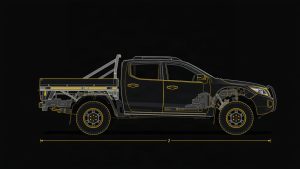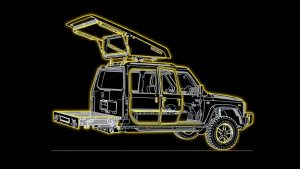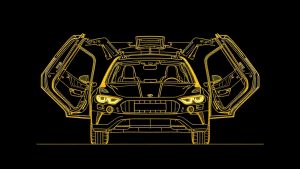
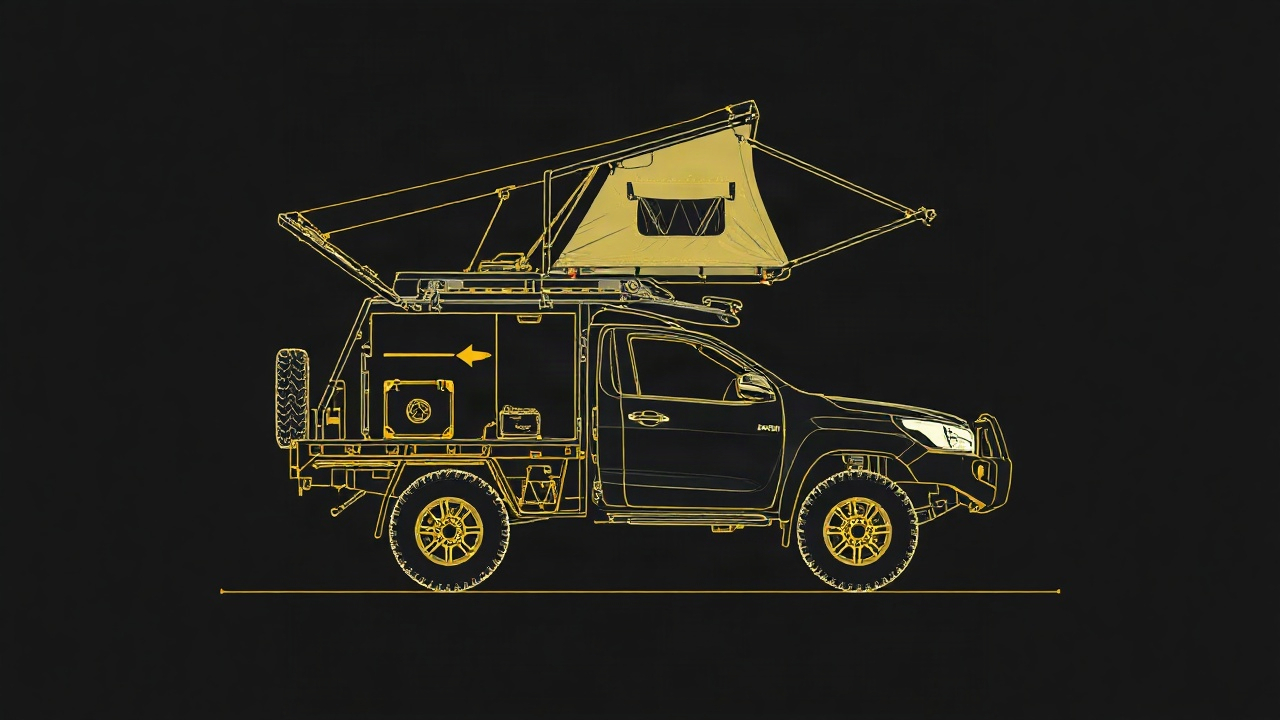
The best ute canopy for touring and camping is a sealed aluminium box, light enough to leave payload for water and fuel, with a roof built to carry a rack or tent and a layout that puts the fridge, kitchen and recovery gear where you can reach them without unpacking. Dust sealing and weight decide whether a touring canopy works out on a long dirt road. UTE HARIO builds them to order in Melbourne.
Start with the trip, not the canopy
A weekend at a coastal campground and three weeks through the Kimberley ask for different builds. The first can live with a basic shell, a fridge and a tub of camp gear. The second needs water for days, spare fuel, a second battery that keeps the fridge cold while you sit still, and a box that keeps bulldust out after hundreds of kilometres of corrugations.
Write down the longest trip you realistically do in a year, how many people come, and how remote it gets. That list sets water capacity, power, and how much space goes to food versus gear. Build for that trip. Every other trip then fits inside it.
Dust and water sealing come first
On dirt roads, a canopy works like a vacuum. The air behind a moving ute is low pressure, and dust gets pulled in through any gap it can find, mostly around the rear door and the lower edges. Once fine dust is in, it gets into the fridge seals, the bedding and the drawers, and it stays there for the rest of the trip.
What stops it is well-fitted door seals with even compression, sealed seams, and good latches that pull the door tight. We have gone through the details in how a canopy is made waterproof and dustproof. Before a big trip, close each door on a strip of paper and pull it out. If it slides out with no drag anywhere along the seal, that spot will let dust in.
Doors and layout for camp
Gullwing doors earn their place on a touring build. Raised, they shade the kitchen side and keep light rain off you while you cook. You can see the whole side of the canopy at once, which matters when you are looking for one thing in the dark. The trade-offs are covered in gullwing vs barn door canopies.
Inside, keep the things you use every stop on the side that faces camp: fridge on a slide, the stove and a small pantry. Heavy gear goes low and close to the rear axle. Recovery gear should be reachable without unloading the whole canopy, because you usually need it when the vehicle is stuck at an angle and the ground is soft. Drawer systems help here, and we covered load ratings and slide choice in aluminium drawers for canopies.
Water, fuel and where to put them
Water is the heaviest thing most tourers carry, and it is dead weight until you use it. A tank under the tray keeps that weight low and out of the canopy entirely. Sizing is covered in water tank trays for touring. If you carry jerry cans, keep fuel outside the sealed box, restrained and away from anything that can spark. Petrol fumes in a closed canopy in the sun are a real hazard, not a theoretical one.
Racks, awnings and rooftop tents
A lot of touring gear ends up on the roof: an awning, a rooftop tent, a few Maxtrax, a shovel. That only works if the canopy roof was built to carry load. A roof skinned over a light frame will flex and leak around the rack mounts.
Check three numbers before you commit: the rack’s rating, the canopy roof’s rating, and what the vehicle maker allows. A rooftop tent also carries people at night, so the static load is higher than the tent’s own weight. Our article on roof racks for ute canopies goes through mounting and load.
Weight and GVM
Touring builds creep. The canopy, drawers, fridge, dual battery, water, fuel, food, recovery gear and people add up, and a lot of tourers find out at the first weighbridge that they are over. Being over GVM can affect insurance and roadworthiness, and it wears out suspension, tyres and brakes faster on rough roads.
The right numbers are on your vehicle’s compliance plate and in the owner’s manual. Work backwards from payload: subtract the canopy and fitout, then everything else you load for your longest trip. If you are tight, cut weight from the build before you think about upgrades. Aluminium helps, since the shell is much lighter than steel, but it does not fix an overloaded fitout. Take the ute across a weighbridge fully loaded before you leave.
Swapping between work and touring
If the ute works during the week and tours on the weekend, a canopy you can lift off gives you both. The HARIO FC-180 jack-off crossdeck canopy stands on its own legs so you can drive out from under it and get a flat tray back. Heavy LandCruiser setups have their own considerations, which we covered in canopy fitment for the LandCruiser 70 series.
What to send us
Your vehicle, whether it already has a tray, the longest trip you plan, how many people travel, and what you want on the roof. Photos of your current setup and a list of what annoys you about it help more than a spec sheet. Browse the range in the shop or read more in our canopy articles.
Frequently asked questions
What is the best ute canopy for touring?
A sealed aluminium canopy with a fitout sized to your trip, not to a brochure. Dust sealing, a roof built to carry a rack, a fridge on a slide at a sensible height and enough payload left for water and fuel matter more than any single feature. Start with where you are going and for how long.
Gullwing or rear door for camping?
Gullwings suit camping well because the raised door gives shade and rain cover over the kitchen side, and you can reach the whole side of the canopy at once. A rear door is fine for a simpler setup. Plenty of touring builds have gullwings on both sides plus a rear door, so pick based on how you set up camp.
How do I keep dust out of a canopy on corrugated roads?
Good door seals, sealed seams and a way to keep slight positive pressure inside the box. Dust gets pulled in through the lowest-pressure gaps, usually around the rear door, so the seal there matters most. Check seals before every big trip, because a seal that has taken a set will let bulldust in by the end of the first long dirt road.
Can I put a rooftop tent on a ute canopy?
Yes, if the canopy roof and rack are built and rated for it. The tent’s weight, the rack’s rating, the canopy’s roof load and the vehicle’s own limits all have to line up. Ask for the roof rating in writing and check it against the tent’s weight plus the people sleeping in it.
How much weight can a touring canopy setup carry?
That depends on your vehicle. Check the payload and GVM on the compliance plate and in the owner’s manual, then subtract the canopy, fitout, water, fuel, fridge, batteries, people and gear. If the numbers are tight, cut weight from the build first. A weighbridge visit fully loaded before the trip settles the question.