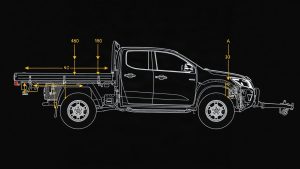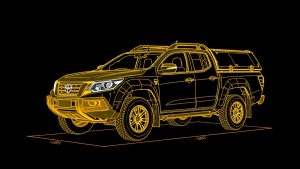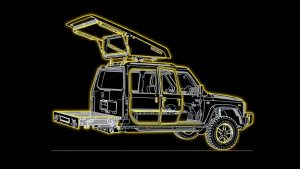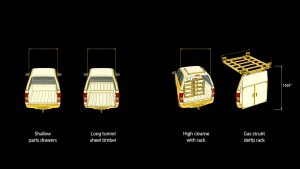
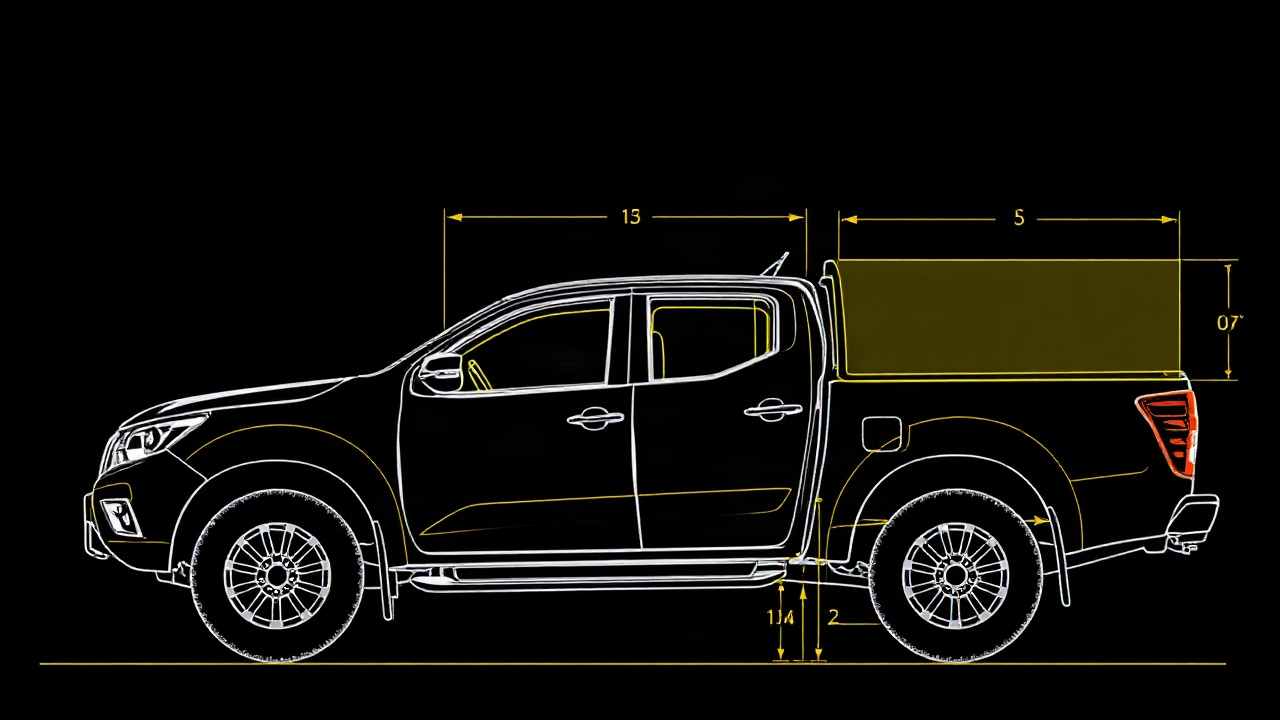
A standard ute canopy is usually built to sit about level with the cab roof. A high-top canopy rises above the cab to give more internal height. Standard suits most tradies and anyone who parks in the city or a home garage. High-top suits people who need to stand gear upright, run tall drawer systems or fit a fridge with room above it. Heights vary by maker and vehicle, so treat these as common ranges and check the spec for your ute and the canopy you’re considering.
What “standard” and “high-top” usually mean
There’s no industry-wide measurement for either term. Makers use them to describe where the canopy roof sits compared with the cab.
A standard canopy lines up with the cab roofline, or close to it. From the side the ute looks flat across the top, and roof racks can often run from the cab over the canopy on one level.
A high-top canopy sits above the cab roof. You gain internal height across the whole length of the tray. The trade-off is a taller vehicle, a different silhouette and more exposure to wind.
For a concrete reference point, the product page for our HARIO FC-180 Jack-Off Crossdeck Canopy lists its external size as 1800 × 1800 × 850 mm. Where the top of that box lands on your ute depends on the tray height and the vehicle underneath it, which is why two owners with the same canopy can end up with different overall heights.
Who a standard-height canopy suits
Most buyers end up with a standard height, and for good reason. It keeps the ute’s overall height close to stock, which helps in multi-storey car parks, underground garages at apartment blocks and drive-throughs. It also keeps roof racks on a single line if you carry ladders or conduit.
For tradies, a standard canopy with gullwing doors usually gives you all the access you need. You reach in from the side, and drawers and shelving sit at a comfortable working height. We cover common trade layouts in the best ute canopy for tradies in Melbourne.
Who a high-top canopy suits
High-tops make sense when internal height is the thing you’re short of. Typical cases are a fridge on a slide with room to open the lid, stacked drawer systems with space above for bags, tall tools or equipment that has to travel upright, and touring setups where you want to reach deep into the canopy without unpacking half of it first.
If you tour, read the best ute canopy for touring and camping alongside this guide. A lot of touring gear packs well into a standard canopy, and the extra height is only worth it if you’ll actually use the space.
Clearance: car parks, garages and carports
This is where height matters most day to day. Car parks, garages, carports and some fuel station canopies have height limits, and they aren’t all the same. A high-top canopy with a roof rack on top can push the vehicle past limits a stock ute would clear.
Don’t work it out on paper. Once the canopy and any racks are on, measure from the ground to the highest point of the vehicle, including rack bars, lights and antennas. Write the number on a sticker inside the cab so you’re not guessing at the boom gate. Remember that the ute sits a little lower when loaded and higher when empty, so measure it empty to get the worst case.
Wind resistance and fuel use
A taller canopy puts more area into the wind. In general that means more drag at highway speed, and more drag means more fuel. How much depends on the ute, the canopy shape, what’s on the roof and how fast you drive, so we won’t quote a figure.
If fuel matters to you, keep a simple log for a few tanks before the fit and a few after, on similar trips. That tells you more about your own setup than any general claim. Crosswinds are worth thinking about too: a tall, flat-sided canopy catches more side wind on open roads.
Roof loads, rooftop tents and racks
Height and roof loads tend to come up together. A canopy roof is often where people mount racks, awnings or a rooftop tent. Whatever the height, the canopy structure, its mounts and the rack all need to be rated for what you put up there, including the extra forces on rough roads and corrugations.
Check the canopy maker’s roof load rating and your vehicle handbook before adding a tent or heavy rack, and remember that anything on the roof also counts toward your payload. Our article on roof racks for ute canopies covers mounting options, and the crossdeck toolbox canopy (FC series) guide explains how the front crossdeck changes the layout.
Height starts with the tray
The canopy sits on the tray, so the tray’s deck height is part of the final number. A tray with deep side rails or under-tray toolboxes can change where the canopy floor sits. If you’re still choosing a tray, ute tray sizes explained covers lengths and widths, and it’s easier to plan canopy height when tray and canopy are designed together.
How to choose
Start with the tallest thing you carry often, not the tallest thing you carry once a year. Then think about where you park most nights and where you drive for work. If a standard canopy fits your gear, it’s usually the easier ute to live with. If you keep running out of vertical space, a high-top is worth the extra height.
Before ordering, get the maker to confirm the finished height against your actual ute, tray and roof setup. You can browse more canopy guides in our canopies section, see the range in the UTE HARIO shop, or send us your vehicle details and we’ll work through the height with you.
Frequently asked questions
What is the difference between a standard and a high-top ute canopy?
A standard canopy is built to sit roughly in line with the cab roof, so the ute keeps a flat, even profile. A high-top canopy rises above the cab to give you more internal height for drawers, fridges or standing gear upright. Exact heights differ between makers and vehicles, so check the spec sheet for the canopy and ute you’re looking at.
How tall is the UTE HARIO FC-180 canopy?
The product page for the HARIO FC-180 Jack-Off Crossdeck Canopy lists an external size of 1800 × 1800 × 850 mm. The overall height once it’s on your ute also depends on the tray height and the vehicle, so measure the fitted setup rather than adding numbers on paper.
Will a high-top canopy fit in car parks and garages?
It depends on your ute, the tray, the canopy and anything on the roof. Height limits vary from one car park or garage to the next. Measure the finished vehicle from the ground to its highest point, including racks and antennas, and compare that with the posted limit before you drive in.
Does a taller canopy use more fuel?
A taller canopy adds frontal area, and more frontal area generally means more wind resistance at highway speed. How much that changes your fuel use depends on the vehicle, the canopy shape, roof loads and how you drive. The best guide is your own fuel records before and after the fit.
Can I put a rooftop tent on a ute canopy?
Many owners do, but the canopy, its mounting and any roof racks all need to be rated for the load, including the extra forces when driving on corrugations. Check the canopy maker’s roof load rating and your vehicle handbook, and ask the maker before fitting a tent or heavy rack.