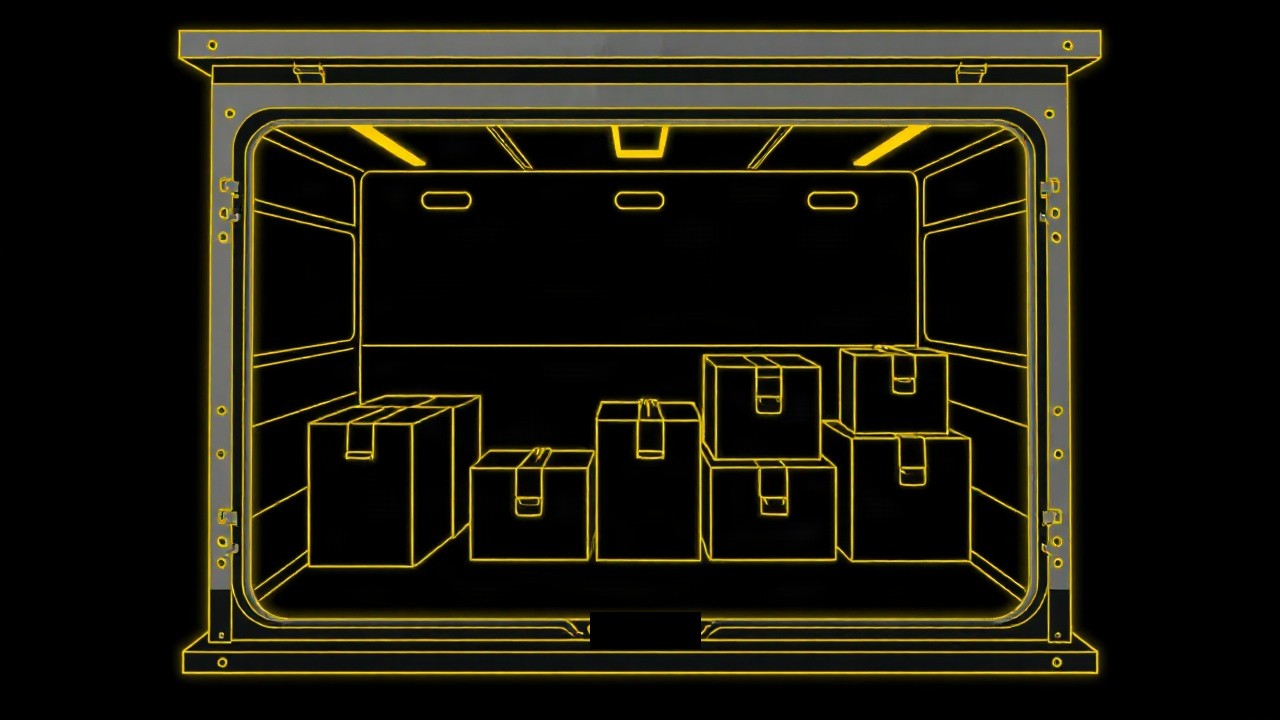
Load restraint in a ute canopy means stopping gear from sliding, tipping or flying forward when you brake hard, not just keeping it inside. Use fixed tie-down points along the floor, ratchet straps or nets for loose items, drawers and dividers for tools, and keep heavy gear low and forward. Plan the tie-down points into the canopy build so they are fixed to the structure.
A closed canopy gives a false sense of security. Nothing falls out on the road, but in a hard stop a toolbox or a full jerry can keeps moving until something stops it, and that something is usually the canopy wall, a door or the back of the cab.
Why restraint matters inside a canopy
- Safety. Heavy items moving in a crash or emergency stop carry a lot of force.
- Damage. Loose gear dents canopy walls, cracks door seals and breaks tools.
- Handling. A load that shifts on corners changes how the ute drives.
- The rules. Loads must be restrained so they cannot fall or shift in a way that makes the vehicle unsafe. National load restraint guidelines set out how, and state authorities enforce them.
Tie-down points
Good restraint starts with somewhere strong to attach a strap. In a canopy that means tie-down points fixed to the floor or lower frame, not just screwed into a thin wall panel.
- Spread them along both sides and across the floor so you can strap from different directions.
- Keep them low, where heavy loads sit.
- Recessed or flush points stop them catching on gear and drawers.
Tie-down points are much easier to place properly while the canopy is being built than to add later.
Drawers, dividers and shelving
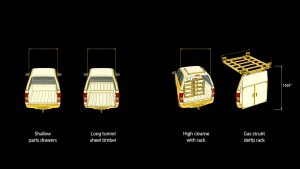
For tools and smaller gear, a fitted storage system does most of the restraining for you. Drawers that latch shut, dividers that stop gear sliding across a compartment and shelves with a lip all keep things in place. Our guide to drawers vs fixed shelving explains the options, and aluminium ute drawers covers drawer builds in more detail.
Cargo barriers
In wagons and dual cabs with an open load area, a cargo barrier separates the load from the people. On a ute with a canopy, the cab already has a solid back, so the main job falls to restraint inside the canopy. If you carry heavy gear high up behind the cab, or carry tall items that could hit the rear window, talk to us about a headboard or barrier suited to your setup.
Loading heavy gear
- Low and forward. Put the heaviest items on the floor, close to the front of the canopy and between the axles where possible.
- Light gear up high. Bedding, clothes and light boxes go on shelves or the roof.
- Fill gaps. Gear that is packed tightly moves less than a few items in a big space.
- Check your payload. Everything in the canopy counts. See weight, payload and staying legal.
A quick check before you drive
- Is anything heavy loose on the floor?
- Are drawers latched and doors locked?
- Are straps tight and not frayed?
- After the first few kilometres of a trip, has anything moved?
Build it in from the start
The best load restraint is designed with the canopy: tie-down points where you need them, compartments sized for your gear and drawers that latch. UTE HARIO canopies are built to order, so tell us what you carry when you ask for a quote. Look at the HARIO FC-180 jack-off crossdeck canopy, browse the shop, or read more canopy guides.
Frequently asked questions
Do I need to restrain loads inside a closed canopy?
Yes. A closed canopy stops things falling out, but it does not stop them sliding and hitting the canopy walls, doors or the back of the cab under heavy braking. Anything heavy or loose should be tied down or held in drawers or dividers.
What is a cargo barrier for?
A cargo barrier sits between the load area and the cab or passenger area and stops gear moving forward in a sudden stop. In a ute with a canopy, the main job is usually done by tie-downs, drawers and dividers inside the canopy itself.
Where should tie-down points go in a canopy?
Along the floor and lower walls, where loads sit, and spread out so you can strap gear from more than one direction. Plan them when the canopy is built so they are fixed to the structure, not just the skin.
Are there rules for load restraint in Australia?
Yes. Loads must be restrained so they cannot fall off or move in a way that makes the vehicle unsafe. National load restraint guidelines explain how, and state road authorities enforce them. Check the current guidance for your state.