Good 12V power in a ute canopy starts with a list, not a battery. Work out what you need to run and for how long, put an auxiliary battery low near the cab, charge it from the vehicle with a DC-DC charger, fuse every circuit, and have an auto electrician do the vehicle-side wiring.
Most problems we see with canopy power come from doing it backwards: buying a big battery first, then finding the cable is too thin, the fridge cuts out on day two, or the starting battery is flat in the morning. Plan it in this order and most of that goes away.
Start with what you actually need to run
Write down every 12V item that will live in the canopy and how long it runs each day. For most setups the list is short:
- LED strip lights inside the canopy and over the tailgate
- A fridge or freezer on a slide
- USB and 12V outlets for phones, radios and tool battery chargers
- A water pump, if you carry a tank
- Maybe an inverter for small 240V tools or a laptop
The fridge is usually the biggest daily draw because it cycles day and night. Lights and USB charging are small. Inverters are where people get caught: a 240V tool charger or coffee machine can pull more in an hour than everything else uses in a day. If you need serious 240V, plan for it from the start rather than adding it later.
Keep the starting battery out of it
Anything that runs with the engine off should run from its own auxiliary battery, not the ute’s starting battery. A fridge left on the starting battery overnight is the classic way to end up asking a stranger for a jump start.
Lithium (LiFePO4) batteries are the common choice now. They weigh roughly half as much as an equivalent lead-acid battery and can be drawn down further without damage. They cost more up front and need a charger set up for lithium. Lead-acid AGM still works and costs less, but you carry more weight for the same usable power.
Charging: DC-DC, solar, or both
Modern utes with smart alternators often won’t charge a second battery properly through a simple isolator. A DC-DC charger takes power from the vehicle and charges the auxiliary battery at the right voltage while you drive. For tradies who drive between jobs every day, that alone is usually enough.
Tourers who stay put for a few days add solar: a panel on the canopy roof or a portable blanket. Many DC-DC chargers have a solar input built in, so one unit handles both. We’ll cover battery sizing and DC-DC choices in more detail in a separate guide.
Where everything goes
Weight and cable length decide the layout:
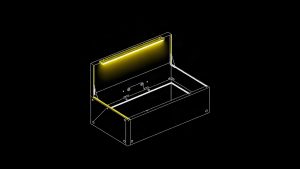
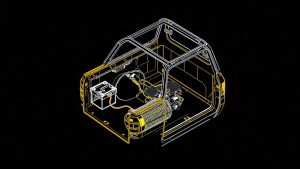
- Battery: low and towards the cab end, strapped into a box or tray that can’t move under braking. Short cable runs to the vehicle mean less voltage drop.
- Fuse block and switches: somewhere you can reach without unloading the canopy, usually just inside a side door.
- Lights: along the top edge of each opening so the work area is lit, not your face.
- Outlets: near where you use them. A USB outlet beside the drawer you open most is more useful than six outlets in a corner.
Keep everything inside the payload limit. Battery, charger and wiring add up, along with drawers, water and tools. Our guide to canopy weight and payload shows how to check yours.
Cable, fuses and the jobs to leave to an auto electrician
Cable size depends on how much current the circuit carries and how far it runs. Too thin and you lose voltage, the fridge struggles, and in the worst case the cable overheats. Every circuit needs a fuse or circuit breaker close to the battery. Cables passing through aluminium need grommets so the edge can’t wear through the insulation over corrugations.
Fitting lights and plugging into existing outlets is fine for most owners. Running the main cable from the vehicle battery, fitting the DC-DC charger and installing the auxiliary battery is work for a licensed auto electrician. It doesn’t cost much compared with the canopy, and it’s the part where a mistake can start a fire.
Plan the power before the canopy is built
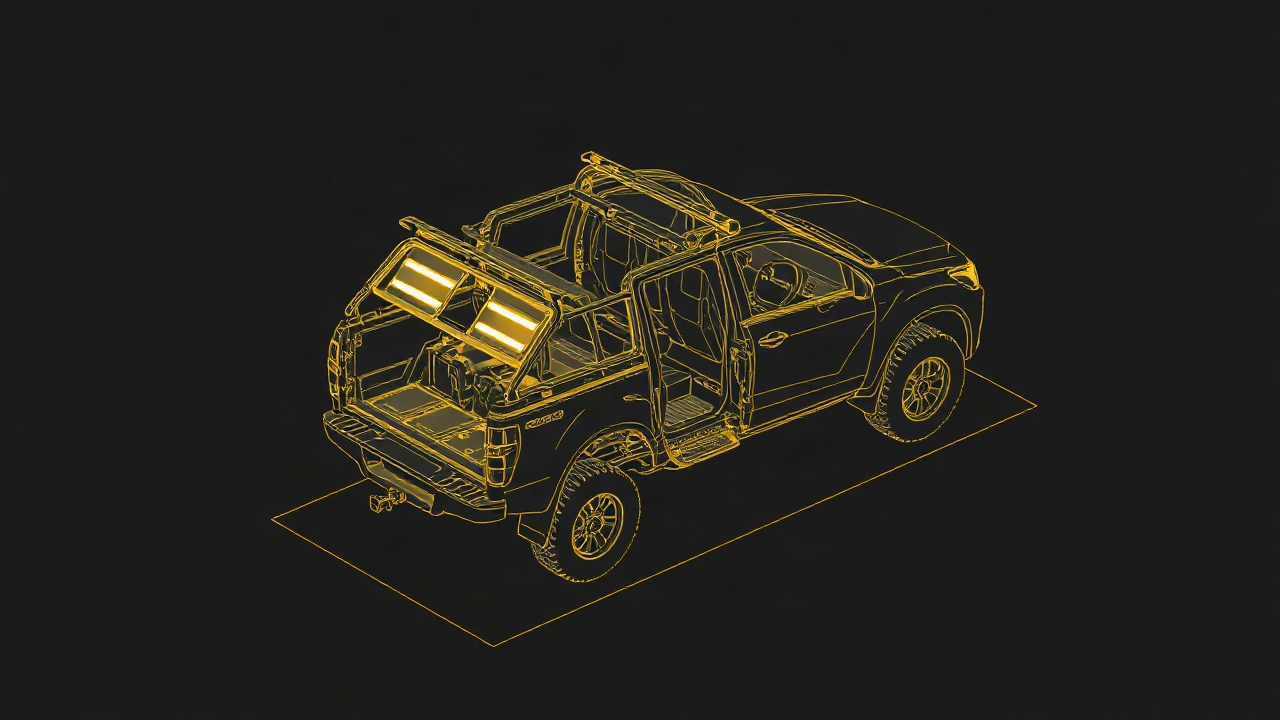
The easiest time to sort out 12V is before the canopy is made. Cable entry points, a battery box under the floor or in a front compartment, and mounting rails for lights can be built in rather than drilled in later. That keeps the canopy sealed against dust and water, which matters on dirt roads.
UTE HARIO canopies are made to order, so tell us at the quoting stage what you plan to run and we’ll leave room for it. Start with the HARIO FC-180 jack-off crossdeck canopy, see how drawers fit around a battery box in slide-out drawers vs fixed shelving, or browse more build and fit-out guides.
Frequently asked questions
Do I need a second battery to run 12V gear in my canopy?
For anything that runs while the engine is off, like a fridge or overnight lights, yes. Running them from the starting battery risks a ute that won’t start. A separate auxiliary battery with its own charger keeps the two apart.
Can I wire 12V power in my canopy myself?
Simple jobs like plugging lights into an existing outlet are fine. Running new circuits from the vehicle, fitting a DC-DC charger or adding an auxiliary battery is work for a licensed auto electrician, because undersized cable or missing fuses can cause fires.
Where should the battery go in a ute canopy?
Low, secure and as close to the cab end as practical, in a ventilated box or an approved enclosure for the battery type. That keeps weight forward and cable runs to the vehicle short.
How much does 12V power add to canopy weight?
A lithium battery, charger, wiring and outlets typically add far less than a lead-acid setup, but it all counts against payload. Weigh it into your plan alongside drawers, water and tools.
Can UTE HARIO canopies be pre-set for 12V?
Yes. Because the canopy is built to order, cable entry points, battery box space and mounting for lights and outlets can be planned in before the canopy is made, so the auto electrician isn’t drilling a finished canopy.